 Sir Auditor Uviesherhe
A road can appear in a federal budget yet never reach construction in your community. That is why tracking Nigeria federal budget projects requires more than finding a figure online.
Citizens can compare budget documents, payment records, procurement notices, and what they see on site. Through patient record-keeping, community members can ask better questions and drive public sector accountability while supporting stronger fiscal discipline across government agencies.
Start by separating a promise on paper from proof of money released, a contract awarded, and work completed.
Key Takeaways
- A federal budget line shows an approved plan, not proof that a contractor received money or completed work.
- Search by project name, location, ministry, department, or agency, often called an MDA.
- Check Open Treasury for spending disclosures that support budget transparency, then compare them with procurement information from the Bureau of Public Procurement.
- Record the project code, capital projects budget amount, contractor details, dates, photos, and site observations before raising concerns.
- Use a respectful written complaint or a Freedom of Information request when public records are missing.
How to Find Nigeria Federal Budget Projects in Your Area
Nigeria’s annual federal budget includes recurrent expenditure, such as salaries and overheads, and capital projects for assets and infrastructure. Community initiatives usually appear under capital expenditure. They may include boreholes, basic education classrooms, primary healthcare facilities, solar lights, roads, skills centres, or equipment.
The National Assembly considers and passes the 2026 Appropriation Bill, then the President assents to it as an Appropriation Act. However, the document can be lengthy and project descriptions may use formal language. A project in your village might be listed under a nearby town, ward, constituency, or an MDA headquarters in Abuja.
Begin with the current federal budget and search for place names in several forms. Official sector allocations published by the Federal Ministry of Budget can help guide your search. Use the local government area, community name, ward, major landmark, and state. Also search for the likely sector. For example, a water project may sit under the Federal Ministry of Water Resources and Sanitation, while a classroom project could appear under the Universal Basic Education Commission or another education agency.
Try search terms such as:
"community name" federal budget 2026"local government name" capital project"state name" borehole appropriation"community name" constituency project"MDA name" budget implementation report"project description" contractor Nigeria
Don’t rely on a single spelling. Many budget documents use abbreviations, omit local details, or describe a project as “provision of” or “supply and installation of.” Search “solar streetlight” as well as “solar light,” for example.

A line item may also be a constituency intervention. Such projects are still funded through federal MDAs, even when a senator or House of Representatives member helped propose them. The implementing agency, not the politician’s public statement, is the first place to seek technical records.
An approved allocation is the beginning of a paper trail. It does not show whether cash was released, a contract was awarded, or a project was delivered.
Understand the Four Stages of a Public Project
Tracking becomes easier when you treat each project as a chain of separate events. A missing link in the chain is useful information, but it is not automatic proof of wrongdoing.
| Stage | What it shows | Useful evidence |
|---|---|---|
| Budget approval | Government planned and approved expenditure | Appropriation Act, budget line, project code |
| Fund release or payment | Treasury or agency recorded money movement | Payment report, budget implementation report |
| Procurement | Agency sought or approved a supplier or contractor | Tender notice, bid record, no-objection record, award details |
| Physical delivery | Work, goods, or services reached the stated location | Site visit, photographs, completion certificate, community testimony |
First, find the project in the approved budget. Record the exact wording rather than rewriting it. A small difference can matter. “Construction of a health post” is not the same as “renovation of a health post,” and “supply of hospital equipment” does not mean a new building exists.
Next, look for evidence of budget execution. The Office of the Accountant-General of the Federation, or OAGF, publishes federal financial information through Open Treasury. The portal operates under a fiscal framework that covers daily payment reports and periodic budget implementation reports. Payment entries can help you establish whether a named MDA recorded spending connected to a project or contractor.
Still, payment data may describe a broader contract, a mobilisation payment, or a batch of projects. Compare dates, amounts, MDA names, and narration fields before drawing conclusions.
Procurement is the third stage. The Bureau of Public Procurement, or BPP, regulates federal procurement under the Public Procurement Act 2007. A tender notice may show that an agency invited bids. An approval or no-objection record may show a procurement process progressed. Neither item alone proves the contractor finished the work.
Finally, visit the site safely and lawfully to assess infrastructure development. Observe the location, condition, visible work, and whether the facility functions. Do not confront workers or enter restricted sites. Photographs taken from public access points, dated notes, and clear descriptions are more useful than angry posts online.
Use Official Portals Before Social Media Claims
Start with the federal Open Treasury portal at opentreasury.gov.ng, which serves as a major step toward genuine budget transparency. It is the government’s spending-disclosure platform. Search the relevant MDA, date range, beneficiary name, and payment narration where the records allow it. The portal is useful for checking reported treasury transactions and monitoring active budget execution.
If the portal is unavailable or difficult to search, use a secondary tool to locate clues, then verify them against official records. BudgIT’s GovSpend platform helps citizens, journalists, and civil-society groups analyse federal spending data drawn from treasury disclosures.
For procurement information, check the BPP website, bpp.gov.ng, including its Nigeria Open Contracting Portal, commonly called NOCOPO. Search for the implementing MDA rather than only the community name. The BPP’s PCOMS pages can also contain procurement notices, advertisements, and issued no-objection records.
A useful order of work is:
- Find the budget line and identify the responsible MDA.
- Search the MDA’s website for its procurement plan, tender notices, annual report, and contact details.
- Search BPP and NOCOPO for notices, awards, and no-objection information.
- Check Open Treasury or GovSpend for spending entries that may match the MDA, contractor, date, or project.
- Compare those records with a careful site visit.

Search results can be incomplete. Some records are published late, documents may be scanned PDFs, and agencies may use varying project names. Save PDFs, take screenshots that show the web address and date, and note every search term you used.
Civil-society tools can also point you towards field reports. BudgIT’s Tracka programme allows citizens to follow public projects and share feedback from their communities. Relying on these insights alongside official portal data ultimately strengthens public sector accountability, though official documents and direct agency responses remain important for verification.
Build a Project File Before You Visit the Site
A project file turns scattered information into evidence that another person can check. It can be a notebook, spreadsheet, shared folder, or printed file. Keep original documents and avoid editing downloaded records.
Record these fields for every federal project:
| Field to record | Why it matters |
|---|---|
| Exact project title and code | Connects your notes to the budget line |
| MDA and department | Identifies who should answer questions |
| Budget year and approved amount | Shows the approved scope and value |
| Project location | Prevents confusion with a similar project elsewhere |
| Funding source, if listed | Helps distinguish federal, state, and donor-backed work |
| Procurement reference number | Links the project to tender or award documents |
| Contractor or supplier name | Helps match payment and procurement records |
| Contract sum and award date | Supports comparison with work on ground |
| Payment date and amount | Shows a reported transaction, not completion |
| Planned completion date | Gives a basis for asking about delay |
| Site observations | Captures condition, access, and visible progress |
Use neutral language in your notes. Write “foundation excavated, no workers seen at 10:30 a.m. on 14 July” rather than “contractor abandoned the site.” The first statement records what you observed. The second claims intent that you may not be able to prove.
Where possible, ask two or three residents who use the area about the project. Note their names only with permission. Their accounts may reveal whether work began, paused, or never reached the stated site. However, personal recollection should support documents and photographs, not replace them.
When you track capital projects such as primary healthcare clinics and basic education schools, make sure your records note the specific project codes that link local initiatives to priorities in the national development plan.
For projects involving equipment, check function as well as delivery. A borehole may have a pump but no water. Solar lights may be installed but fail at night. A health centre may have a new structure but no staff, power, or equipment. Each fact belongs in the record.
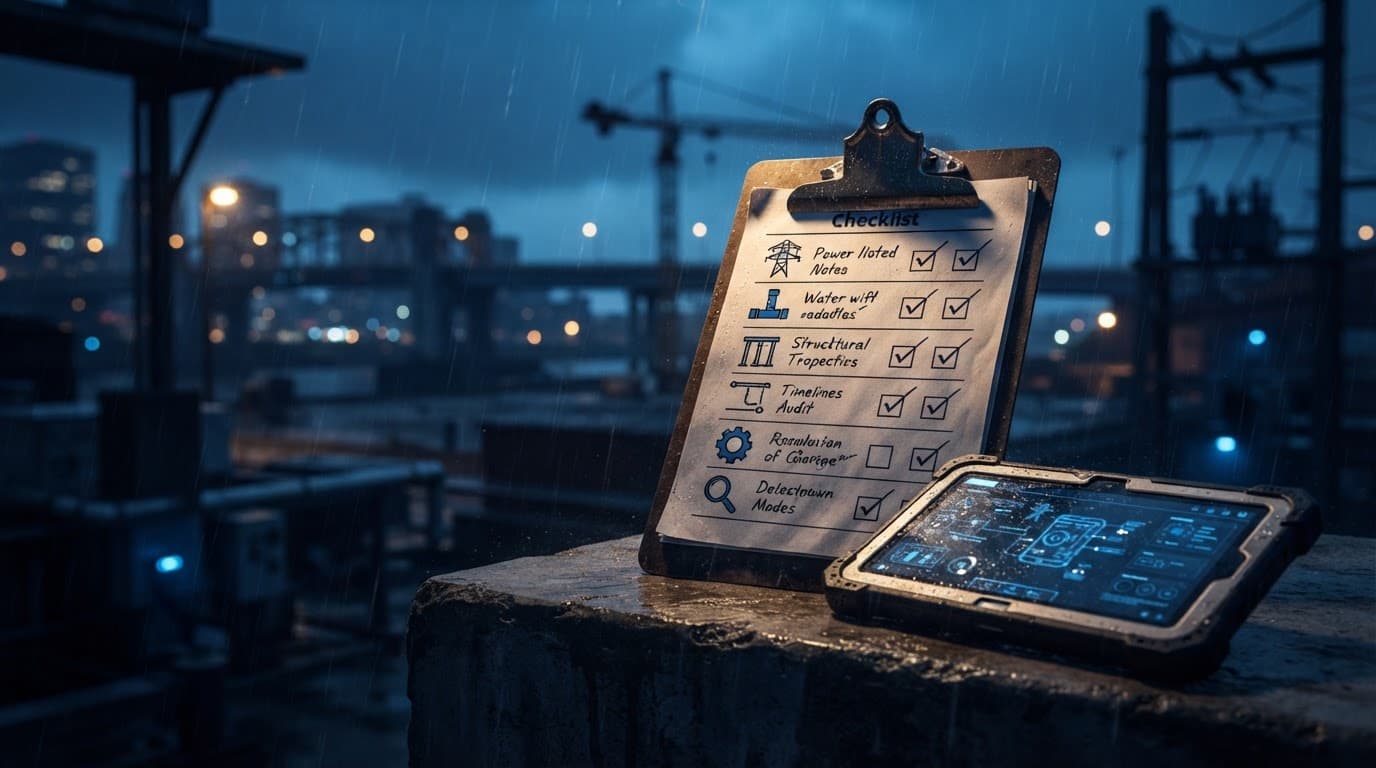
A Simple Checklist for Monitoring Work on the Ground
Community monitoring is strongest when it is calm, regular, and factual. A single visit can miss activity, weather delays, or temporary site closure. Revisit at reasonable intervals and compare the same points.
Before leaving home, print or save the budget description, MDA name, project location, and any procurement reference. Carry a phone with enough battery, a notebook, and a way to record the date. Avoid photographing people without consent, especially children.
At the site, use this checklist:
- Confirm that the location matches the budget description and local directions.
- Photograph the approach road, project signboard if present, and visible work from public areas.
- Note the date, time, weather, GPS location if safe, and names of nearby landmarks.
- Describe work completed, materials on site, equipment present, and whether workers are active.
- Check whether the public can use the facility and whether it works as intended.
- Ask respectful, open questions of community members, not accusations directed at workers.
- Compare what you found with the approved description, contract scope, and reported payments.
- File the notes and photos promptly, using a consistent project name and visit date.
A signboard can help, but its absence does not prove fraud. Likewise, a contractor’s name on a signboard does not prove that the stated contract value or project scope is correct. Treat each detail as one piece of the record.
For a road project, evaluate the physical infrastructure development by noting the road segment, drainage, pavement condition, culverts, and whether the route connects the places stated in the budget. For a school project, note the number and condition of buildings, furniture, water access, and whether pupils are using the space. When monitoring rural initiatives such as water systems or farm inputs, assess how well the execution supports agricultural productivity and food security in the area. Match your observations to what public documents actually promised.
Report Gaps and Request Records Through FOI
First contact the implementing MDA in writing. Keep the message short, factual, and specific. Ask for a response by email or letter. Include the project title, budget year, location, and reference number. Avoid alleging theft or naming individuals without evidence. Using these communication channels supports fiscal discipline across public institutions.
You can use this reporting template:
Subject: Request for information on [project title] in [community, LGA, state]
I am requesting information on the federal project listed as “[exact budget description]” for the [budget year] appropriation. Please provide the implementing department, procurement reference number, contractor or supplier name, contract sum, award date, payment status, expected completion date, and current project status. During a site visit on [date], I observed [brief factual observation]. Please send the response to [email or address].
If the MDA does not provide the records, submit a request under the Freedom of Information Act 2011, usually called the FOI Act. The Act allows any person to request records from public institutions without giving a reason. Address the request to the head of the institution or its FOI desk officer. Deliver it through a channel that gives proof of receipt. These accountability measures are vital when monitoring dedicated social intervention programs and broader economic reforms in your community.
State that you seek records under the FOI Act. Describe the documents precisely. Broad requests often produce delays because staff must guess what you need. Ask for electronic copies where possible, since copying fees may apply.
A clear FOI request can read as follows:
Freedom of Information request
Under the Freedom of Information Act 2011, I request electronic copies of records relating to “[exact project title]” in [location] for the [year] federal budget. Please provide the approved bill of quantities or project scope, procurement plan entry, tender or bid notice, evaluation or award record, contract agreement, payment records, work-completion certificate, and inspection reports.Please acknowledge receipt and send the records to [email]. If any record is withheld, please state the legal exemption relied upon and provide the remaining non-exempt parts.
Public institutions generally have seven days to respond under the FOI Act. They may extend the period in limited circumstances, such as when a request covers a large volume of records or requires consultation. Keep your acknowledgement, delivery receipt, emails, and a timeline of follow-up messages.
When a response reveals a genuine concern, send the evidence to the MDA’s internal audit unit, its leadership, or the appropriate oversight body. Journalists and trusted civil-society organisations can help review documents before publication. BudgIT’s public-finance work can also help citizens understand spending and accountability data.
Know the Limits of Budget Tracking
Public records do not always use the same language. A payment may cover several locations, while a budget line may be vague. Contract information can also appear after the budget year, especially where procurement started late or work continued under a multi-year arrangement against a backdrop of national budget deficit challenges.
Portal access can fail, and disclosures can arrive late due to broader macroeconomic indicators and funding shifts. Save what you find and record the date you accessed it. If a portal is unavailable, ask the MDA for the same document instead of treating the outage as proof that no record exists.
Federal, state, and local government projects can look similar on the ground. Confirm the implementing MDA before attributing a project to the federal government. Also distinguish a contractor’s slow progress from abandonment. Only records, repeated observation, and a fair response from the agency can establish the fuller picture, keeping in mind that resolving these delivery bottlenecks contributes to long-term fiscal sustainability and sustained economic growth.
Respect safety and privacy. Do not trespass, disrupt work, publish private phone numbers, or put community members at risk. Good monitoring asks hard questions while treating people fairly.
Frequently Asked Questions
What is the difference between an approved budget and actual project delivery?
An approved budget line shows a planned government expenditure, but it does not guarantee that money was released, a contractor was hired, or the project was actually built. Citizens must check payment records, procurement notices, and physical site conditions to confirm whether work was completed.
How can I find a federal project that is located in my specific community?
Start by searching official budget documents using multiple terms, such as the local government area, ward, community name, and nearby landmarks, as project descriptions can sometimes use broad regional terms. You can also look up the relevant ministry, department, or agency (MDA) responsible for that specific sector, like water resources or education.
What should I do if public records or project details are missing?
If an agency fails to provide necessary information or if online portals are unavailable, you can submit a formal written request or use the Freedom of Information Act 2011. Always keep your requests factual, specific, and well-documented to ensure public institutions respond properly and maintain accountability.
Conclusion
Citizens can track Nigeria federal budget projects by following the evidence from appropriation to procurement, payment, and physical delivery. A careful project file makes every later question stronger, ensuring that public investments align with the priorities set out in the 2026 Appropriation Bill.
A budget figure is not a completed borehole, clinic, road, or classroom. Verified records and factual site observations give communities a sound basis for asking public institutions to account for what they promised, which ultimately supports poverty reduction, human capital development, revenue mobilisation, strengthened security architecture, and broad economic growth.





Add comment