 Sir Auditor Uviesherhe
You can earn from weekday meals without renting a restaurant or buying a kitchen full of costly equipment. A low-capital food business in Nigeria can begin with lunch packs prepared at home, provided your kitchen meets applicable hygiene requirements.
The practical starting point is preorders: find nearby buyers, confirm their meals, and cook quantities you can sell. However, affordable ingredients alone won’t make the business profitable; portions, packaging, food safety, and delivery all affect your earnings.
Start by choosing customers you can reach reliably, then build a small service around their lunch routine. When unemployment is high, you think outside the box to break the vicious circle.
How to Build a Low-Capital Food Business in Nigeria by Selling Lunch Packs
The model is straightforward: offer a short menu, collect orders before cooking, and arrange delivery or pickup. Because you know the quantities beforehand, you can buy ingredients deliberately and avoid preparing a pot of food nobody ordered.
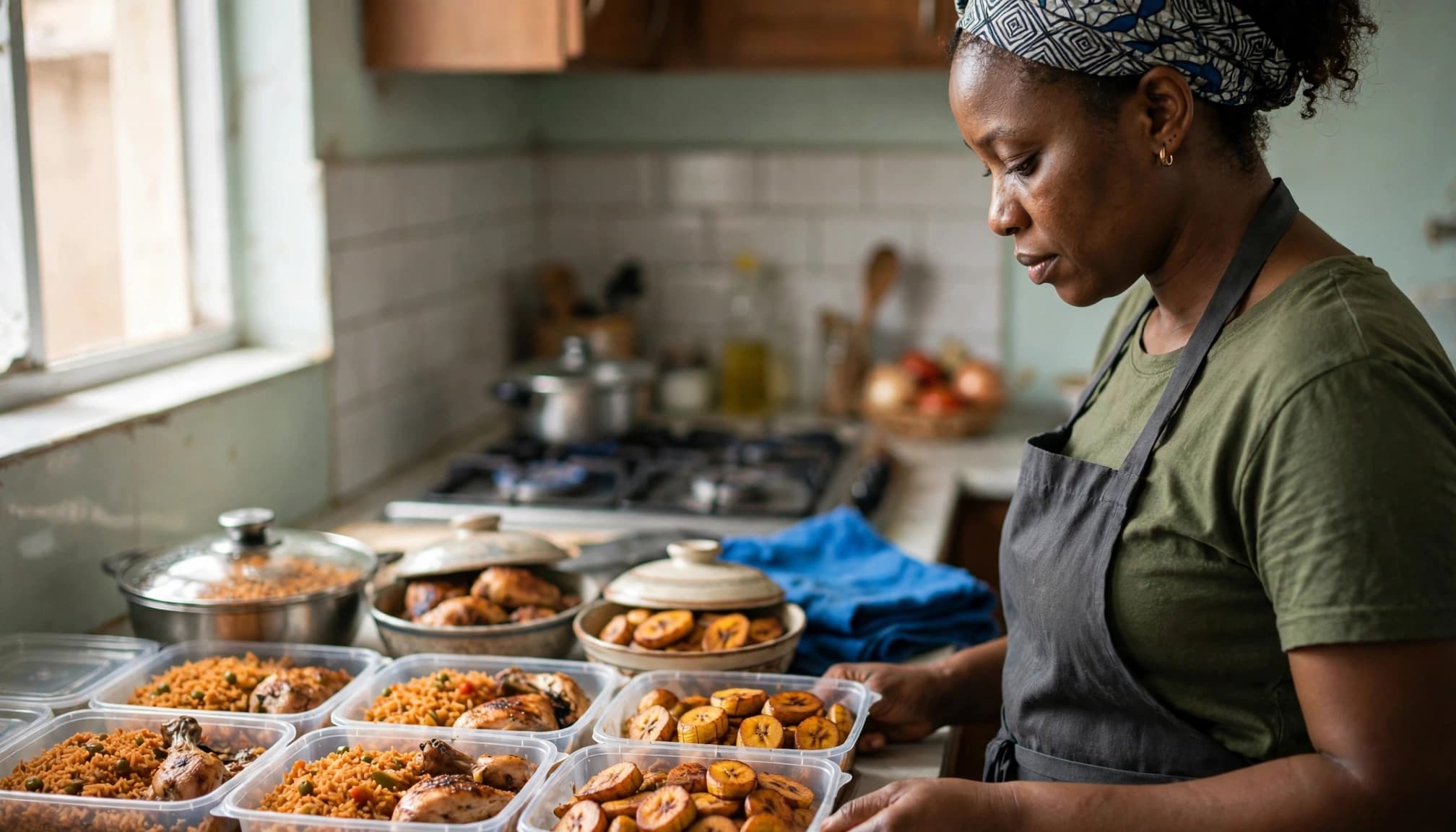
Choose a lunch crowd you can reach easily
Begin with one customer group: workers in nearby offices, students, salon staff, or shop owners. Keep your first service area small enough to handle without expensive transport.
Before spending money, speak with potential buyers. Ask what they currently eat, how much they spend, and when their lunch break begins. Also check whether they prefer pickup or delivery.
Listen for practical details. An office may welcome several meals delivered together, while students may prioritize price and filling portions. These differences should shape your menu and delivery plan.
Start with a simple menu Nigerians already enjoy
Jollof rice with chicken, rice and stew, beans with plantain, and swallow with soup are familiar choices. Start with two dependable meals rather than offering everything daily.
Rice dishes can share ingredients such as tomatoes, onions, pepper, and oil. Meanwhile, beans with plantain offers a different option without requiring an elaborate kitchen setup.
Choose dishes you already cook consistently. Swallow and soup can work, but they need suitable containers and careful packing. Add more meals only after customers request them and your existing service runs smoothly.
Plan Startup Costs, Portions, and Lunch-Pack Prices
There’s no reliable fixed startup amount for every Nigerian city. Ingredient prices, fuel costs, available equipment, and delivery distances differ, so check your local market before launching.
Use existing pots, utensils, and storage equipment only when they’re clean, sound, and suitable. Read NAFDAC’s food hygiene guidelines before assessing your preparation space.
Buy small quantities initially. Bulk purchases save little if ingredients spoil or tie up money needed for tomorrow’s orders.
Work out the cost of each pack before setting a price
Record ingredients, cooking fuel, takeaway containers, cutlery, transport, payment charges, and cleaning supplies. Include a fair allowance for your time and a share of equipment replacement costs.
Divide each batch’s costs by the number of saleable packs it produces. Then compare that figure with the price customers will accept.
Profit per pack equals the selling price minus the full cost per pack. If that leaves too little, adjust the recipe, portion, or delivery arrangement before accepting orders.
Recalculate whenever supplier prices change. Otherwise, a meal that earned money last month may now lose money.
Set portions that are filling and easy to repeat
Use the same scoop or weighing scale for rice, beans, and sides. Standardize protein sizes too, because uneven chicken pieces can make identical prices feel unfair.
Offer clear regular and larger packs if buyers need different quantities. However, avoid several sizes that complicate cooking and packing.
Describe what’s included before payment. Customers should know whether plantain, extra stew, or delivery costs more.
Prepare and Deliver Lunch Packs Safely and on Time
Work backward from your promised handoff time. Allow enough time for shopping, cooking, packing, and travel, including likely traffic delays.
Write down the routine so anyone helping follows it. NAFDAC’s 2025 Food Hygiene Regulations call for food-handler training appropriate to the work.
Use preorders to reduce waste and protect cash
WhatsApp messages, phone calls, or a simple order form can collect meal choices, quantities, pack sizes, and delivery details. Keep everything in one order record rather than searching through scattered chats.
Set a cutoff you can meet. Previous-evening orders may work better when you shop early or prepare alongside another job.
Confirm the meal, total charge, payment, and delivery window before cooking. Verify transfers in your account rather than relying only on screenshots.
Also explain cancellation and refund terms upfront. Keep prepaid orders recorded separately so their money remains available to fulfill them.
Choose practical packaging and a dependable delivery plan
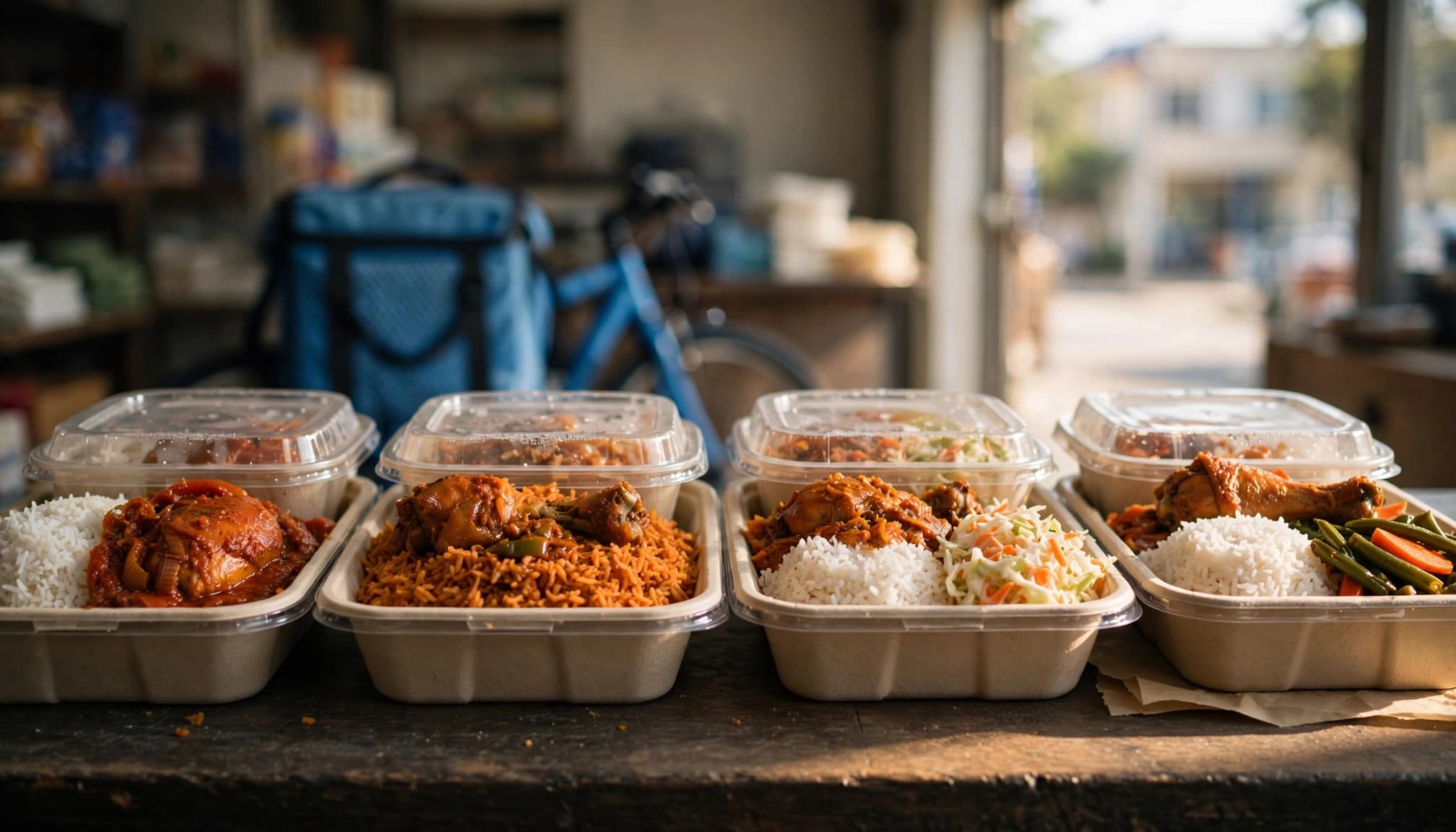
Buy food-grade containers with lids that fit securely. Test them with your actual meals before purchasing a large quantity.
Basic takeaway packs may suit rice, while stew and soup need stronger spill protection. Pack sauces separately when necessary, and keep containers upright during transport.
Pickup avoids delivery costs. Walking delivery suits short distances, while a dispatch rider may suit larger or more distant orders.
Confirm the rider’s availability beforehand. State delivery areas and fees clearly, and tell customers promptly if delays occur.
Keep Food Safety and Business Requirements in Order
A home kitchen still needs commercial discipline. Keep raw meat away from cooked food, wash hands properly, and clean food-contact surfaces between tasks. Use safe water, covered bins, and protected ingredient storage.
Wash hands after handling cash and before returning to food preparation. Anyone who is ill, particularly with vomiting or diarrhea, shouldn’t prepare customer meals.
Keep hot food at 60°C or above and chilled ingredients at 5°C or below. Don’t leave cooked meals at room temperature for more than two hours. An insulated delivery bag helps, but it doesn’t replace temperature control.
Because electricity interruptions can affect refrigeration, plan around storage you can trust. Don’t chop vegetables or cook meals the night before unless you can refrigerate them safely.
Ask about allergies before accepting special orders. Identify ingredients such as fish, crayfish, milk, or groundnuts when present. Also avoid promising an allergen-free meal if your kitchen cannot prevent cross-contact.
Before trading, confirm local environmental-health requirements, food-handler checks, and applicable business registration rules. A CAC registration doesn’t replace food-related permits or approvals.
Review NAFDAC’s micro-scale enterprise guidance and ask which provisions apply to your operation. Don’t assume every fresh lunch-pack service follows the same registration route as a packaged-food manufacturer. Obtain requirements and fees through official channels, and keep receipts.
Find Lunch-Pack Customers and Grow Without Overspending
A small customer base that orders regularly is easier to serve than scattered buyers across town. Concentrate on nearby demand before paying for advertising or adding delivery routes.
Your promise should be concrete: a stated meal, an accurate portion, and a dependable lunch window.
Promote your meals through WhatsApp and nearby businesses
Post an actual photo of your food on WhatsApp Status. Include the menu, pack price, order deadline, delivery area, and any delivery charge.
Make ordering easy with a message customers can copy: their meal choice, quantity, pack size, location, and preferred handoff time. Clear information reduces repeated questions during cooking hours.
Visit nearby offices, salons, shops, and workshops with permission. Ask whether staff would welcome a daily menu message or one combined delivery.
Satisfied customers can share your menu with colleagues. However, don’t add people to groups or circulate their phone numbers without consent.
Build trust with consistent quality and repeat-order offers
Repeat buyers notice whether today’s pack matches yesterday’s. Keep seasoning, portions, packaging, and timing dependable rather than compensating for poor service with discounts.
After delivery, ask whether the portion was sufficient and the meal arrived in good condition. Record complaints and correct recurring problems.
A modest referral reward or repeat-customer offer can encourage orders, but calculate its cost first. Free delivery may erase your margin when customers live far apart.
Expand only when repeat demand supports it. Add one meal or route at a time, then check whether quality and earnings remain steady.
Track Orders and Earnings Before Expanding
A low-capital food business in Nigeria needs simple records from its first selling day. A notebook or spreadsheet is enough, provided you update it consistently.
Record each day’s confirmed orders, packs sold, revenue, ingredient spending, fuel, packaging, and delivery costs. Keep receipts where possible, and separate business money from household spending.
Also record cancellations, refunds, wasted food, and late deliveries. These details reveal problems that total sales alone can hide.
Money received for tomorrow’s meals must remain available for tomorrow’s ingredients, packaging, and delivery.
At the end of each week, compare meals by actual earnings and repeat orders. A popular dish may earn less than another because its protein or packaging costs more.
Check whether grouped office deliveries cost less per pack than individual trips. Similarly, note which customers reorder without discounts and which meals generate leftovers.
Pay yourself from earnings after meeting business costs, rather than treating every payment as available cash. Then reserve money for the next service day.
Before buying equipment, identify the problem it will solve. A larger pot is useful when confirmed orders exceed your cooking capacity. It offers little benefit when the real problem is too few buyers.
Start Small With a Menu People Will Reorder
Lunch packs offer a practical way to earn from weekday meals without committing to restaurant rent. Success depends on tested demand, careful costing, safe preparation, and reliable handoffs.
Let repeat orders guide expansion. A manageable service with accurate portions gives you better control than a broad menu you struggle to deliver.
Start by asking a small group of nearby customers what they’d order and what they’d pay. Then test a limited menu, take confirmed preorders, and review the results before spending more.





Add comment