 Sir Auditor Uviesherhe
Being told your academic record cannot be found can threaten an admission offer, job application, or NYSC plans. However, that statement doesn’t establish that every copy has disappeared. For issues of records, you will be better off relying on documents to prove your points.
When dealing with lost academic records in Nigeria, your first priorities are identifying the missing document and creating a written trail. Each university has its own procedures, so start with the office responsible for that record, then escalate with evidence rather than repeated verbal requests.
Key Takeaways
- Identify whether the problem concerns a transcript, statement of result, certificate, or the records used to produce them.
- Keep copies of every request, receipt, attachment, and reply, and ask for written acknowledgement.
- Request an authorised search and, where possible, reconstruction from verified university records.
- Treat legal and regulatory complaints as separate options with limits, not guaranteed routes to a replacement document.
Identify Exactly Which Academic Record Is Missing
A missing document and missing underlying academic data require different responses. Ask the university to explain which problem it has identified before making another application or payment.
Missing transcript or statement of result
A transcript normally records courses, grades, credit units, and academic sessions. A statement of result confirms an academic outcome but doesn’t necessarily provide the detailed record a receiving institution needs.
If your transcript hasn’t arrived, establish whether it was never prepared, is awaiting approval, or was dispatched unsuccessfully. An undelivered transcript doesn’t automatically mean your grades are lost.
Also confirm the recipient’s requirements. An official transcript may need direct university dispatch, while a student copy may be unacceptable. AuditNaija’s Nigerian university transcript application guide explains these distinctions and request preparations.
Missing certificate or underlying student file
A certificate confirms the award. Its absence doesn’t necessarily mean the university has lost the records supporting that award.
However, an unavailable student file may involve admission documents, registration history, or results needed for verification. Ask which components are missing.
If you personally lost a certificate, follow the university’s replacement policy. Don’t assume that an affidavit or police report required for personal loss also applies when the institution misplaces its own records.
Confirm the Problem Through an Official Channel
Start with the university’s current website, student portal, handbook, or published Registry instructions. The responsible office might be Academic Affairs, Examinations and Records, the transcript unit, or another Registry department.
Provide your full name as recorded during study, matriculation number, programme, faculty, attendance period, and graduation year where applicable. Mention any previous surname, programme transfer, or change of matriculation number that could affect the search.
Ask whether the problem is a missing file, incorrect identifier, incomplete clearance, unapproved result, or technical failure. These issues need different remedies.
Request written confirmation of what cannot be located and what happens next. If staff only explain verbally, send a factual follow-up email recording the date, office, and explanation received. Ask them to confirm or correct your understanding.
Avoid opening duplicate applications unless instructed. Multiple references can make tracking harder without resolving the original problem.
Build an Evidence Folder Before Escalating

Your copies can help staff identify records and check inconsistencies. However, they don’t automatically become an official academic record.
Gather evidence that supports your history
Collect relevant admission letters, course registration forms, result slips, portal screenshots, clearance documents, fee receipts, and any previously issued statement of result or certificate.
Include earlier transcript application references and dispatch confirmations if available. Keep original files unchanged and make readable scans with every page visible.
JAMB admission evidence can support admission history, but it doesn’t establish university grades. Similarly, an NYSC document doesn’t replace semester results.
Keep a dated contact and submission log
Record each visit, email, request reference, payment, and reply. Note the officer’s name or office where known, without guessing missing details.
For physical submissions, take a second copy and request a dated receiving stamp or signature. For online requests, save acknowledgement emails, confirmation screens, and attachments.
Store backups securely because academic records contain personal information protected under Nigeria’s data protection framework. Don’t post unredacted documents publicly to attract attention.
Submit a Clear Written Request to the Registrar
Address your letter to the office named in the university’s procedure. Where responsibility is unclear, ask the Registrar’s office where to submit it and which department should receive a copy.
Use a specific subject, such as “Request to Locate Academic Records and Resolve Transcript Application.” Include your identifying details, the affected document, previous request dates, and references.
Explain what staff told you without accusing anyone of theft or negligence unless you have evidence. Then ask for the action you need: a records search, clarification of missing components, or guidance on authorised reconstruction.
You can include this request:
“Please acknowledge receipt, confirm which records cannot currently be located, and advise the responsible office and next steps.”
Attach relevant copies and provide reliable contact details. If an admission or employment deadline is approaching, state the exact date and attach supporting evidence.
Ask when you should follow up. A requested response date helps organise your complaint, but it isn’t automatically a legal deadline binding the university.
Ask for a Search Across Existing University Records
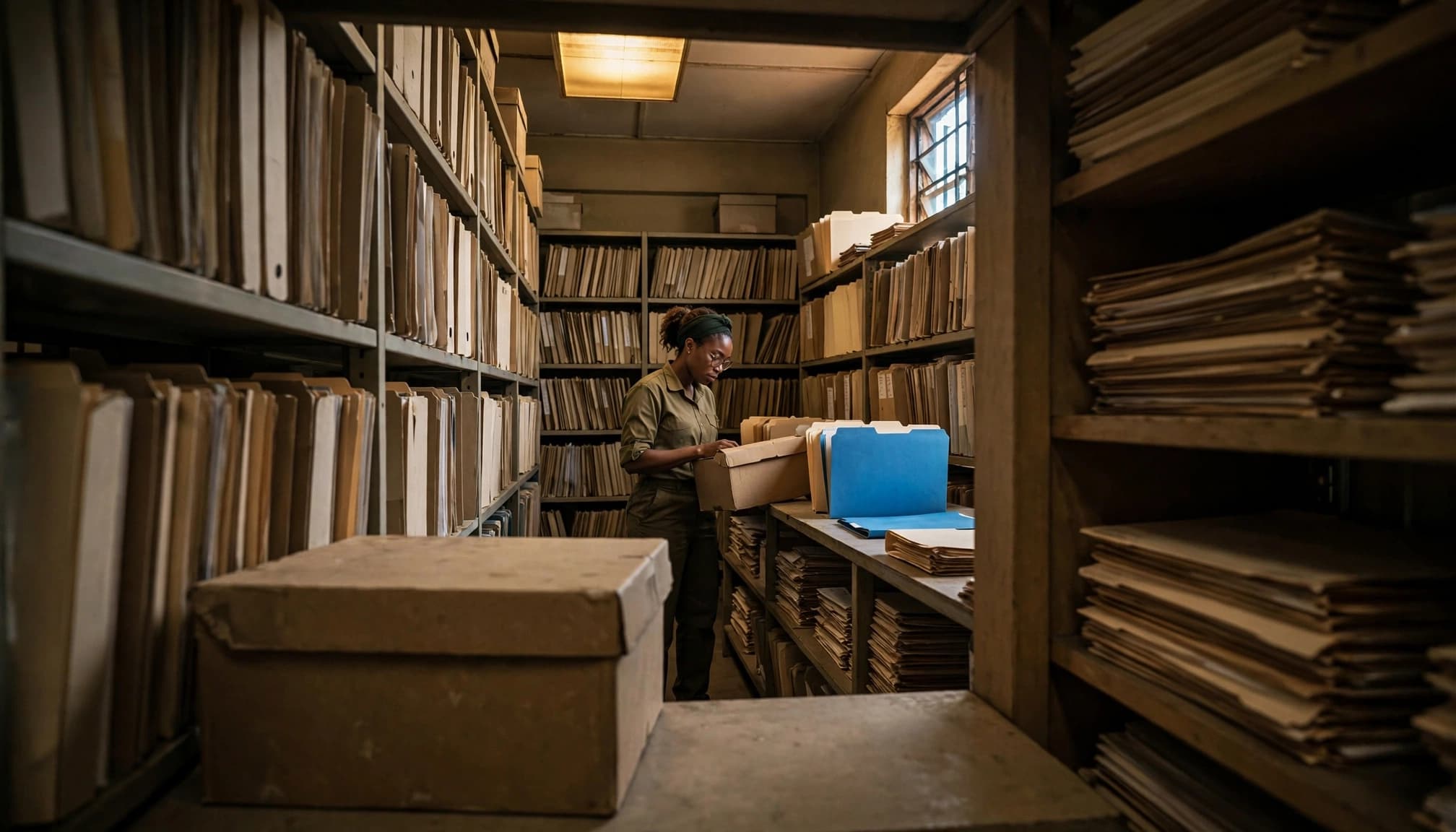
Depending on what the university maintains, relevant information may exist in departmental result sheets, examination ledgers, faculty records, approved graduation lists, Registry archives, or digital backups.
Ask staff to check these sources through authorised channels. Also ask whether older files are held under a previous department name, programme, surname, or storage location.
If reconstruction is possible, request the university’s requirements in writing. It may need to compare several records and obtain internal approval before issuing a document.
Verified reconstruction must establish what you studied and the approved academic outcome. Your recollection of grades, classmates’ results, or an unofficial spreadsheet cannot safely replace that process.
Where a recovered record contains an incorrect grade, missing course, or calculation error, ask whether a separate correction or appeal is required. AuditNaija’s university examination result appeal guide explains how to present a factual complaint.
Finding a file doesn’t automatically resolve every discrepancy within it.
Escalate Without Losing the Paper Trail
Follow the university’s published complaint route. Depending on its structure, this may involve the Head of Department, Dean, Registrar, or Vice-Chancellor’s office. Don’t assume every institution requires the same sequence.
Send a concise chronology with copies of earlier requests, acknowledgements, and replies. Explain what remains unresolved and the action you are requesting. Keep the same identifying details across submissions.
If a stated processing period has passed, refer to it directly. Where none was given, request a status update and proposed next step rather than claiming a universal turnaround time.
Before petitioning the National Universities Commission, confirm whether it accepts your type of complaint and where to submit it. Don’t assume it holds your student file or operates a nationwide replacement service.
For serious, prolonged delays, a Nigerian lawyer can assess the evidence, applicable university rules, and possible remedies. Keep proof of any admission, employment, or financial consequences.
Understand the Limits of Legal and Regulatory Options
Access to existing personal data is different from obtaining a newly issued qualification document. Choose the legal route according to the problem you can demonstrate.
Personal-data access and NDPC complaints
Section 34 of the Nigeria Data Protection Act 2023 provides rights concerning access to personal data and information about its processing.
A separate data-access request can ask what personal academic data the university holds and seek a copy, subject to applicable legal limits. Send it through the institution’s verified privacy contact or designated office and retain delivery evidence.
Section 46(1) permits complaints to the Nigeria Data Protection Commission about alleged violations. However, an NDPC complaint doesn’t guarantee transcript issuance, reconstruction, or recovery. Confirm the Commission’s current submission requirements before filing.
Freedom of Information requests and legal advice
The Freedom of Information Act 2011 provides an access framework for covered institutions. Whether it applies to your university and request requires careful checking.
A request should identify the existing records sought. Personal-data protections and exemptions can affect disclosure, as explained in Babalakin & Co’s FOI and data-protection analysis.
Don’t treat every administrative complaint as an FOI request, or assume identical deadlines across universities. Obtain legal advice about applicability, refusal, and any court route.
Neither access law should be presented as requiring a university to manufacture unverified grades or a qualification.
Protect Deadlines and Avoid Unofficial Fixes
Notify the receiving university, employer, or credential evaluator before its deadline. Explain that your institution is investigating a records problem and attach an official acknowledgement if available.
Ask whether an extension or temporary document is acceptable. A statement of result, verification letter, or student copy may help only if the recipient agrees. Keep that agreement in writing.
If NYSC mobilisation is affected, contact your university’s authorised Student Affairs or NYSC desk. Ask whether the issue concerns the academic record or the graduate details submitted for mobilisation.
Meanwhile, continue meeting applicable registration and academic obligations unless the university gives different instructions.
Pay only through verified university channels and retain receipts. Never pay someone to invent grades, bypass approval, or “produce” a certificate. Don’t share portal passwords or surrender your only original documents to an unverified intermediary.
Before paying again, ask how the payment relates to your unresolved request.
Keep the Recovery Process Factual and Documented
A missing academic record needs a precise request, supporting evidence, and an authorised search. Written acknowledgement gives you something concrete to follow up and escalate.
Keep your requests consistent, verify each institution’s procedures, and separate record recovery from grade appeals or legal complaints.
You can’t guarantee the outcome, but you can protect your position by documenting every step and refusing unofficial shortcuts.





Add comment