 Sir Auditor Uviesherhe
A fuel price, a court judgment, or a Boko Haram-related security incident can shape national politics in Nigeria within hours. For citizens, diaspora readers, investors, and students, this wider political agenda affects household budgets, public schools, travel, jobs, and trust in government.
As of August 2026, President Bola Ahmed Tinubu’s government faces public pressure to prove that economic reforms, higher public revenue, and large budgets will produce safer communities and more affordable lives. The facts can shift quickly, so current political and economic claims need careful reading and reliable sources.
Key Takeaways
- President Bola Ahmed Tinubu’s government is balancing economic reforms, higher public revenue, infrastructure plans, and security pressures against rising living costs and public expectations.
- Nigeria’s federal system divides authority among the Executive, National Assembly, Judicial branch, states, and local government councils, although revenue and political influence remain concentrated at the federal level.
- The All Progressives Congress retains federal power, while the People’s Democratic Party and other parties prepare for internal contests and electoral competition ahead of 2027.
- Boko Haram, banditry, kidnapping, communal violence, and farmer-herder conflicts continue to shape public trust, while proposals for state police remain politically and constitutionally unresolved.
- Citizens can follow Nigerian politics more accurately by checking official INEC, National Assembly, court, budget, procurement, and audit records alongside credible news reports.
Nigeria politics in August 2026: the issues setting the agenda
In the Federal Republic of Nigeria, Bola Tinubu of the All Progressives Congress (APC) won the 2023 presidential election. He took office on May 29, 2023, with Kashim Shettima as vice president. Tinubu’s administration has placed fiscal reform, infrastructure, tax changes, industrial policy, and security at the centre of its programme.
The political argument is direct. Supporters say the government inherited weak public finances and difficult exchange-rate distortions. They argue that removing the petrol subsidy, changing foreign-exchange rules, and raising non-oil revenue are necessary corrections. Critics accept that reforms may be needed but question their speed, social cost, and the relief available to low-income households.
A May 29, 2025 Reuters report captured this divide. The government pointed to gains in public finances, while persistent inflation and insecurity remained central public concerns.
Budget figures show the scale of federal ambition, but they also invite scrutiny. State House said Tinubu assented to a N68.32 trillion 2026 Appropriation Bill after the National Assembly completed its work, including consideration by the House of Representatives. The announcement also extended implementation of the 2025 budget to June 30, 2026. The official budget announcement matters because appropriation, releases, procurement, and completed projects are separate stages.
Meanwhile, opposition parties, including the People’s Democratic Party, challenge the APC on living costs, employment, security, and democratic institutions. The All Progressives Congress retains broad federal and state influence, while security threats, including Boko Haram, shape public opinion. The All Progressives Congress also shapes legislative debates over local government funding, state-level policing, party defections, tax rules, and education policy, while the National Assembly scrutinises the administration’s record.
How the Federal Republic of Nigeria is structured
The Federal Republic of Nigeria is a federal republic under the Nigerian Constitution, which is the 1999 Constitution as amended. It separates power among three arms of government. This framework reflects Nigeria’s return from Military rule to constitutional civilian government, although political influence often overlaps in practice.
| Arm of government | Main institutions | Core responsibility |
|---|---|---|
| Executive branch | President, Vice President, ministers, federal agencies | Implements laws, manages national policy, and proposes budgets |
| Legislative branch | National Assembly, Senate, House of Representatives | Makes laws, approves spending, and scrutinises the executive |
| Judicial branch | Supreme Court of Nigeria, Court of Appeal, federal and state courts | Interprets laws and resolves constitutional disputes |
The president leads the Executive branch as both head of state and head of government. Ministers form the Federal Executive Council, while agencies carry out policies in areas such as immigration, roads, education, taxation, and public health. Yet the president cannot legally spend public money without legislative approval.
Legislative power sits with the National Assembly. The National Assembly makes laws, approves spending, and scrutinises the executive.
The Judicial branch includes the Supreme Court of Nigeria, which interprets constitutional rights, along with the Court of Appeal and federal and state courts. The Supreme Court of Nigeria can decide disputes between federal and state authorities, rule on election petitions, and interpret constitutional rights.
Nigeria’s legal system combines English common law, Customary law, and Sharia law. Its rules draw on different traditions, but constitutional rights remain the controlling standard. Customary law has a strong role in personal and community matters, and courts may apply Customary law where local rules are recognised.
Twelve northern states apply criminal provisions based on Sharia law to Muslims alongside the wider legal system. This state-level arrangement can intersect with Customary law in personal matters. Section 10 of the Constitution bars the federation or a state from adopting an official religion. Sharia law therefore operates within state arrangements, while Customary law remains subject to constitutional rights.
The Congressional Research Service overview of Nigeria discusses religious discrimination concerns, including how courts distinguish Customary law from Sharia law in the country’s federal political setting.
The National Assembly, states and local government
The National Assembly is bicameral, meaning it has two chambers. The Nigerian Senate has 109 members, three from each of the 36 states and one representing the Federal Capital Territory, while the House of Representatives has 360 members elected from constituencies of roughly equal population.
A bill usually passes through readings, committee review, debate, and voting in both chambers of the National Assembly, with the House of Representatives and Senate acting separately. The Senate and House of Representatives must agree on the final text before the National Assembly sends it to the president for assent. If a president withholds assent, the National Assembly can override the veto with a two-thirds majority in each chamber.
Beyond lawmaking, the National Assembly exercises legislative power by approving budgets, investigating agencies, and reviewing major appointments. Senate confirmation is required for some senior positions, while House of Representatives committees review spending plans and the House of Representatives investigates agencies. National Assembly hearings can expose weak spending plans or delayed projects, although their effectiveness depends on public records, media attention, and follow-through.
The Federal Republic of Nigeria has 36 states, the capital territory, and 774 local government areas recognised by the Nigerian Constitution. States control basic education, primary health structures, local roads, markets, and land administration, where customary law may shape local practice, while the Federal Ministry of Education sets national policy. Federal revenue allocation gives Abuja major influence because many states across the Federal Republic of Nigeria rely heavily on federation funds.
In July 2024, the Supreme Court of Nigeria ruled that federal allocations should go directly to democratically elected local government councils, a decision the National Assembly has monitored. Implementation has remained politically contested because the National Assembly, states, councils, and federal agencies must settle practical questions around accounts, elections, and oversight after the Supreme Court of Nigeria ruling.
Federal policies dominate headlines, yet many voters judge government by the condition of state hospitals, local roads, schools, and markets.
This tension is built into Nigerian federalism, where the National Assembly uses legislative power to set national standards while states handle local accountability. Citizens expect governors and council chairmen to solve local problems, while the federal government controls much of the country’s revenue, police structure, and national security policy, subject to National Assembly scrutiny.
Political parties, INEC and the road to 2027
Political parties give voters choices, recruit candidates, organise campaigns, and form governments in the civilian system restored after military rule. The All Progressives Congress holds the presidency and broad influence in the National Assembly and state governments. The People’s Democratic Party remains a major opposition force, while the Labour Party and New Nigeria Peoples Party gained prominence during the 2023 General election.
Under the Electoral Act, the Independent National Electoral Commission (INEC) manages the electoral framework of the Federal Republic of Nigeria. It registers eligible parties, maintains the voter register, sets timetables, trains workers, and declares results. The National Assembly reviews electoral rules, while INEC decisions shape confidence for the All Progressives Congress and the People’s Democratic Party.
The 2023 polls showed why election administration attracts such close attention. The Independent National Electoral Commission used BVAS to verify voters and manage result publication. Delayed presidential results on the INEC Result Viewing portal angered the All Progressives Congress, the People’s Democratic Party, and voters.
Election petitions followed and reached the Supreme Court of Nigeria. On October 26, 2023, the Supreme Court of Nigeria dismissed challenges to the All Progressives Congress candidate’s victory. The People’s Democratic Party and other challengers used the courts to contest the outcome.

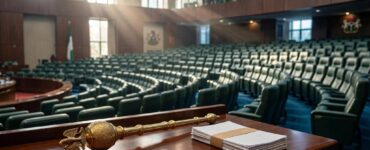
Photo by Fatima Yusuf
As 2027 approaches, the All Progressives Congress and the People’s Democratic Party will face internal tests. Candidate selection often exposes disagreements between national leaders, governors, local party structures, and grassroots members. Defections can alter power when officials from the All Progressives Congress or the People’s Democratic Party switch parties after winning office. The Judicial branch, including the Supreme Court of Nigeria, provides a formal route for resolving election disputes.
Nigeria politics depends on more than the number of registered parties. The All Progressives Congress and the People’s Democratic Party also compete through the National Assembly and federal institutions. Political parties need transparent rules, competent administration, peaceful participation, and courts that can resolve disputes without partisan pressure. The Supreme Court of Nigeria’s ruling closed the legal cases, but arguments about transparency, turnout, logistics, vote buying, and timely publication continued.
Economic reform and the politics of daily costs
Economic policy has become the sharpest test of Bola Tinubu’s presidency. On his first day in office, May 29, 2023, Tinubu announced the end of the petrol subsidy. The policy changed fuel prices quickly and increased transport costs across the country.
The administration also moved toward a more unified foreign-exchange market and ended central bank financing known as Ways and Means advances. Government officials say these steps can improve fiscal discipline and attract investment. Yet households often measure reforms by food prices, rent, transport fares, and the value of their income.
In June 2025, Bola Tinubu signed four tax reform laws after National Assembly passage. They include the Nigeria Tax Act 2025 and the Nigeria Tax Administration Act 2025. Supporters expect clearer rules and stronger revenue collection. Critics remain alert to whether new taxes and compliance costs will burden small businesses or consumers.
The government also launched its Nigeria Industrial Policy 2025, linking economic development to manufacturing, trade, energy, and job creation. Such plans will be judged by their contribution to economic development, with factories operating, salaries paid, and goods reaching markets at prices people can afford.
Budget promises are equally political. A BBC Pidgin report on the 2025 budget outlined large allocations and ambitious inflation goals. The National Assembly must scrutinize appropriations and implementation, but an approved figure is only the beginning. Citizens need to track releases, contracts, project locations, and audit findings.
A larger budget does not automatically improve a community. Public value appears when money is released lawfully and projects are completed to standard.
Security, religion and the pressure on national unity
Security remains a painful issue in the Federal Republic of Nigeria, where Boko Haram continues to shape public fears. Boko Haram became a national insurgency after violent confrontations in 2009, largely in the north-east. Boko Haram attacks killed civilians, targeted schools and places of worship, displaced families, and damaged local economies.
Security forces have reduced the territorial control of Boko Haram since its peak years, but the threat has not disappeared. Counterinsurgency operations have weakened Boko Haram in parts of the north-east, without ending the insurgency. ISWAP, a faction that split from Boko Haram, remains active in parts of the north-east. Elsewhere, armed banditry, kidnapping for ransom, communal violence, and farmer-herder conflicts have created fear in the north-west, north-central region, and some southern states.
Security failures carry political costs. Communities affected by Boko Haram may judge elected leaders less by speeches than by whether children can attend school. Those displaced by Boko Haram may ask whether farmers can reach their land and travellers can use major roads safely. Governors often call themselves their states’ chief security officers, but Boko Haram attacks show they do not control the Nigeria Police Force.
Religion and ethnicity also shape representation, party choices, public trust, and Christian-Muslim relations, but leaders must avoid collective blame. Nigeria has large Muslim and Christian populations, with diverse beliefs and communities in every region. Nigeria’s legal diversity includes Sharia law in some state arrangements, while Customary law remains a distinct local system, separate from constitutional institutions and personal religious identity. Debates about Sharia law must respect constitutional rights.
Bola Tinubu and Shettima’s Muslim-Muslim presidential ticket in 2023 stirred strong criticism from many Christian groups. Supporters argued that competence and regional balance should take priority, while critics feared reduced religious representation at the highest level of government. Those competing views showed why Christian-Muslim relations remain sensitive. Leaders must use inclusive language, protect Christian-Muslim relations, and reject collective blame, faith-based voting appeals, and Boko Haram violence.
State police and textbook policy disputes
Calls for state police have grown because the federal system struggles to respond quickly across a country of more than 200 million people. Supporters say governors need locally accountable forces with better knowledge of communities, languages, and crime patterns.
Opponents raise serious concerns. State governors could misuse police powers against rivals, journalists, protesters, or minority groups. Funding is another obstacle, since some states already struggle to pay salaries and maintain basic services.
Under the Nigerian Constitution, a nationwide state-based policing model requires constitutional change. The National Economic Council backed exploring the proposal in February 2024, but that endorsement did not create a force. It also needs two-thirds approval in the National Assembly, from the Nigerian Senate and the House of Representatives.
That process would require the National Assembly to secure ratification from at least 24 state assemblies. National Assembly debates in the House of Representatives remain contentious, while National Assembly committees and National Assembly oversight would limit political interference.
As of August 2026, Nigeria has no fully operational nationwide state police system. Any final legislation should set clear recruitment standards, independent complaints channels, transparent funding, limits on political interference, and National Assembly oversight.
Education policy has sparked another dispute after the Nigerian Publishers Association rejected a textbook-ranking policy reportedly associated with the Federal Ministry of Education. The Nigerian Publishers Association fears an official hierarchy could become a market endorsement, while the Federal Ministry of Education’s stated curriculum role leaves assessment methods unresolved.
Government quality checks are legitimate, particularly where schools need curriculum-aligned materials, but the Federal Ministry of Education should publish its assessment standards. Consultation by the Federal Ministry of Education should include the Nigerian Publishers Association and explain any appeals process. Until the Federal Ministry of Education confirms whether final guidelines exist and publishes their legal basis, the policy remains a live and contested issue.
How to follow Nigerian politics without getting lost
Daily headlines can be useful, but they rarely give the full picture. For claims from national institutions in the Federal Republic of Nigeria, check the original source. Pay particular attention to election results, budget figures, court judgments, tax changes, and security announcements.
A practical reading habit includes:
- Follow the Independent National Electoral Commission (INEC) for election timetables, voter information, party registration, and official results.
- Read National Assembly bills, committee reports, and budget debates before relying on political summaries.
- Check National Assembly legislative records, including House of Representatives materials; verify Supreme Court of Nigeria judgments before repeating legal claims.
- Compare government announcements with implementation evidence, including procurement records, audit findings, and completed projects.
- Read more than one credible news outlet when reports concern violence, Boko Haram, or allegations involving Corruption in Nigeria; use careful wording until evidence is clear.
The BTI 2026 Nigeria country report raises concerns about political freedoms and pressure on expression. Compare its findings with Nigerian court decisions, civil-society evidence, official releases, procurement records, and audit findings.
A good political reader asks who has legal authority, where the money comes from, and what evidence supports the claim. That habit helps separate campaign language from public accountability.
Frequently Asked Questions
Who is the president of Nigeria in 2026?
Bola Ahmed Tinubu of the All Progressives Congress is president of Nigeria. He took office on May 29, 2023, with Kashim Shettima as vice president.
What are the main political issues in Nigeria in 2026?
The main issues include economic reform, inflation, fuel prices, taxation, public spending, insecurity, and the quality of democratic institutions. Political parties are also preparing for internal contests and wider competition ahead of the 2027 elections.
How is political power divided in Nigeria?
Nigeria’s federal system separates authority among the Executive, the bicameral National Assembly, and the Judicial branch. The country also has 36 states, the Federal Capital Territory, and 774 recognised local government areas, although federal revenue remains highly important to many states.
Does Nigeria have state police?
As of August 2026, Nigeria does not have a fully operational nationwide state police system. Creating one would require constitutional change, approval by two-thirds of the National Assembly, and ratification by at least 24 state assemblies.
How can readers verify political claims in Nigeria?
Readers should check original sources such as INEC releases, National Assembly records, Supreme Court judgments, budget documents, procurement records, and audit findings. Claims about security incidents, corruption, elections, and government projects should also be compared across more than one credible news outlet.
The direction of Nigerian democracy
The Federal Republic of Nigeria has resilient constitutional institutions, active citizens, influential states, and a competitive multi-party tradition. The Fourth Republic began with Nigeria’s democratic transition after military rule. Today, the National Assembly must turn constitutional authority into effective oversight, with the House of Representatives playing a central role.
These strengths operate across a plural legal and social setting shaped by customary law. The All Progressives Congress and People’s Democratic Party remain part of a wider competitive field, while the National Assembly must help ensure that public power produces accountable government people can see in their communities. Nigerians will keep judging leaders by the fairness of elections, the safety of daily life, and whether reform brings practical relief.




Add comment